


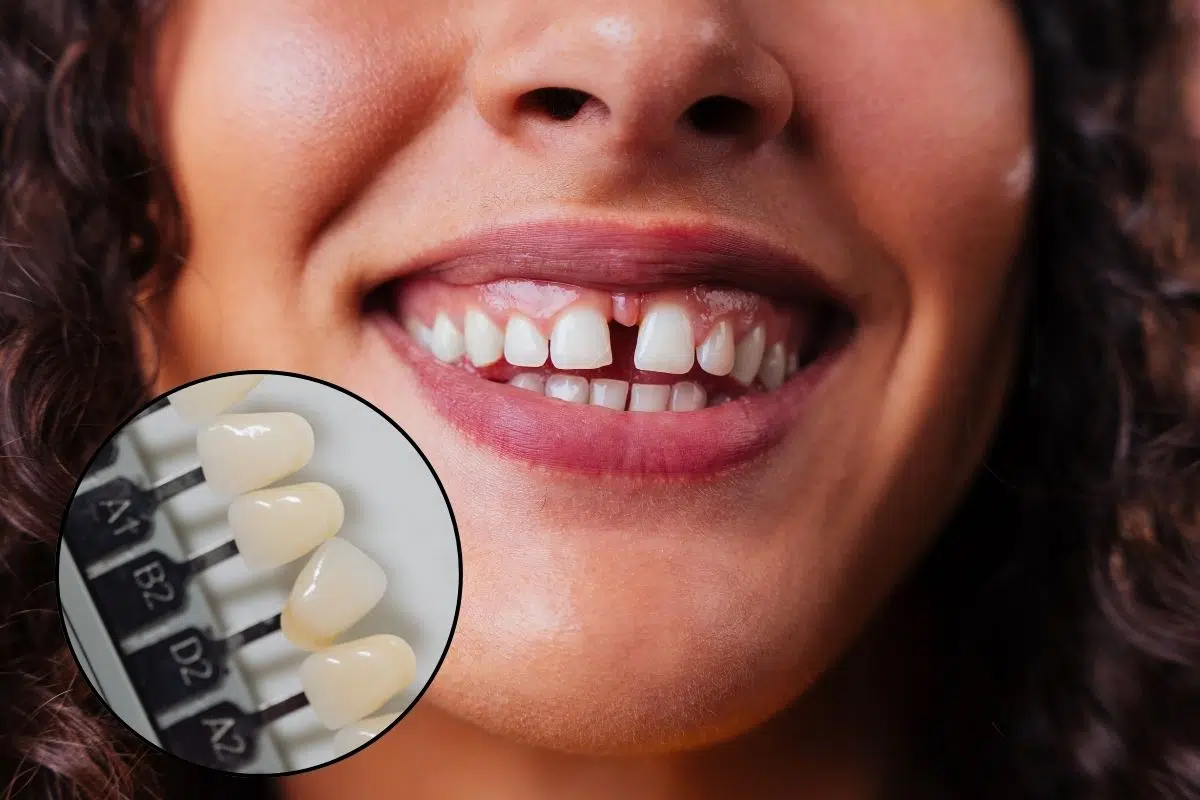
Veneers can often close small spaces by slightly expanding the visible width of a tooth so it meets its neighbor more closely. This approach works best for mild to moderate gaps, usually only a few millimeters wide, and when the spacing isn’t the result of a larger alignment problem. In the right situation, veneers provide a predictable and natural-looking way to bring the teeth into a more even line.
What Causes the Gap in Your Teeth?
Before we recommend veneers, we look at why the gap is there in the first place. Not every space has the same origin. Some come from genetics, where teeth simply grew in with a bit more distance between them. Others trace back to habits, shifting teeth, gum issues, or missing tooth structure.
Is Veneer Good for Addressing Small Gaps in Teeth?
Yes. Veneers are often a practical and dependable option for closing small gaps because they let us adjust width, shape, and symmetry without moving the teeth themselves. When the spacing is minor and the bite is stable, veneers allow us to bring the teeth closer together in a controlled, natural-looking way.
We evaluate the gums, the alignment of the surrounding teeth, and how the change will affect your overall smile. If the gap is small and the tooth proportions support it, veneers can create a smooth, even appearance without compromising function. They work best when the space is narrow enough that only slight adjustments to tooth width are needed.
When Veneers Are a Good Solution
We usually consider veneers option for our Reno patients when:
- The gap is small to moderate. Very wide spaces may require a blend of cosmetic work.
- The teeth are otherwise healthy. Veneers perform best on teeth with stable enamel and no active decay.
- The patient wants to improve multiple aspects at once. Many people use this opportunity to address shape, color, or chipped areas along with the gap.
- There’s no major misalignment. Veneers can mask slight rotations or uneven edges, but they cannot correct a bite that’s significantly off.
When these factors line up, veneers offer both cosmetic precision and long-term durability.
Alternative Options Before Choosing Veneers
Veneers aren’t our default recommendation for every gap. If the space results from shifting teeth or jaw alignment issues, closing it without addressing that underlying cause can create new problems down the road.
Bonding can also be a fit for those who want a conservative option or are watching costs closely.
We guide patients toward what protects their long-term oral health, even if that means starting with alignment before considering cosmetic work.
Will the Gap Reappear?
When veneers are the right solution for your case, the closed space stays closed. The veneer’s width physically occupies the area where the gap once sat.
However, if teeth have a tendency to shift before treatment, we sometimes recommend supportive measures such as addressing bite issues, so the surrounding teeth remain stable.
Ready to Explore Your Options? Consult With Andresen Prosthodontics
If you’re considering veneers to close a small gap or you’re unsure which approach fits your situation, we’re here to walk you through the possibilities.
Contact us today to schedule a visit, and we’ll take the time to examine your teeth, explain your options clearly, and help you choose a path that supports both your smile and your long-term oral health.
Frequently Asked Questions
1. Do veneers permanently close small gaps?
Yes, veneers can permanently close small gaps as long as the teeth and bite are stable. The porcelain veneer is shaped to occupy the space, so the gap does not reopen unless underlying alignment issues remain unaddressed.
2. Are veneers better than braces for closing gaps?
It depends on the cause of the gap. Veneers work well for small spaces caused by natural tooth shape or spacing. But if the gap comes from shifting teeth or bite problems, orthodontics is usually the better long-term solution.
3. Will veneers look wider if they are used to fill a gap?
When designed correctly, no. A properly planned veneer widens a tooth subtly and proportionately, keeping the smile balanced. Careful shaping prevents the teeth from looking bulky or unnatural.
4. Can bonding close small gaps instead of veneers?
Yes, dental bonding can close minor gaps, especially when patients want a quicker or more conservative option. However, bonding is less durable and may require more maintenance than porcelain veneers.
Related Articles


New Patients Appointment Welcome!