
Specialized Care for Implant Complications
A screw broke inside your dental implant. The crown or bridge is off, part of the screw is still down in the implant, and now the question is whether the implant can be saved at all.
In most cases, it can. Implant screw retrieval, sometimes called implant mechanical rescue or IMR, is the procedure that removes a fractured or seized screw from inside an implant and restores the implant to a usable condition. It is a delicate, technique-sensitive procedure that requires specialized retrieval instrumentation, magnification, an understanding of the specific implant system involved, and a great deal of patience.
Andresen Prosthodontics in Reno provides this service to patients and to referring dentists throughout northern Nevada. Drs. Craig and Allison Andresen are board certified prosthodontists and Fellows of the American College of Prosthodontics, with the training and instrumentation these cases demand.
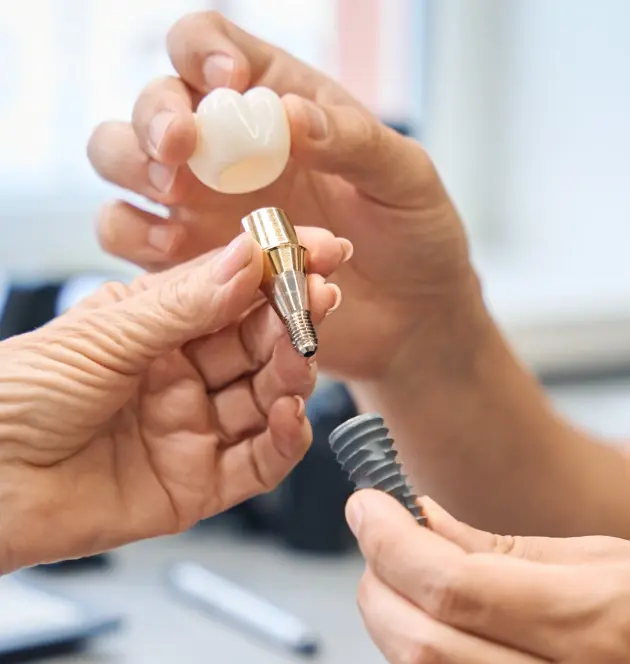
What Is Implant Mechanical Rescue?
Implant mechanical rescue refers to the set of procedures used to recover an implant that has a mechanical problem inside it, without surgically removing the implant from the bone.
That includes:
- Fractured abutment screw retrieval. Removing the remaining screw fragment lodged inside the implant body.
- Stripped screw head removal. When a driver no longer engages the screw head because the internal hex or star has rounded out.
- Seized or cold-welded screw removal. When a screw has effectively fused to the implant threads over years under load.
- Damaged connection assessment. Determining whether the implant connection is still sound enough to support a restoration.
- Debris and cement removal. Clearing material from the implant connection that prevents proper seating.
The goal in every case is the same: keep the implant, restore it, and avoid the surgery, grafting, healing time and cost that come with removing and replacing it.
Why Do Implant Screws Fracture?
Understanding the cause matters, because retrieving the screw without correcting the cause invites the same failure again:
- Overloading. The screw is often the intentional weak point in the system, designed to fail before the implant or the bone does. A screw fracture is frequently the system protecting itself from an excessive bite force.
- Chronic loosening. A screw that has been loose for a long period undergoes fatigue at the micro level. Every chewing cycle flexes it. Eventually it fractures. This is why a loose crown should never be ignored.
- Incorrect torque. Under-torqued screws loosen. Over-torqued screws are stressed from day one. Each implant system has a manufacturer-specified torque value and it needs to be applied with a calibrated torque wrench.
- Bruxism and clenching. Sustained parafunctional force is one of the most common contributors to mechanical failure in implant dentistry.
- Component mismatch. Using a screw or abutment that is not designed for that specific implant connection creates a poor fit and concentrated stress.
- Prosthesis design. Cantilevers, long spans and inadequate implant numbers all concentrate force on individual screws.
How the Retrieval Procedure Works
01
Diagnosis and imaging
We take radiographs to see how much of the screw remains, where the fracture line sits, and whether the implant and surrounding bone are healthy.
02
Implant system identification
We determine the exact implant system and connection type, because retrieval instrumentation and replacement components are system specific.
03
Access and visualization
The site is isolated and examined under magnification and strong illumination. Visibility is everything in this procedure.
04
Conservative retrieval first
If a portion of the screw is still engaged and exposed, ultrasonic instrumentation or fine hand instruments can often back it out by rotating it counterclockwise without touching the implant threads. This is always the preferred approach.
05
Specialized retrieval instrumentation
If conservative methods do not free the fragment, system-specific retrieval kits are used. These include guide sleeves that center the instrument in the implant, and reverse-cutting drills that engage and back out the fragment while protecting the internal threads.
07
Trial and verification
A new screw is placed and torqued to specification to confirm the connection is sound before any restoration is made.
08
Restoration and cause correction
The implant is restored, and we address whatever caused the fracture: bite adjustment, a protective night appliance, a redesigned prosthesis, or additional implant support.
What Happens If the Screw Cannot Be Retrieved?
We will be honest with you about this. Most fractured screws can be retrieved, but not all of them.
If a screw has fractured deep within the implant, has cold-welded to the threads over many years, or if the internal threads are damaged, the implant may not be restorable in its current state. In those situations, the options are implant removal and replacement, or redesigning the prosthesis to work around that implant using the remaining supporting implants.
We will tell you where a case stands before you invest time and money in an attempt that is unlikely to succeed. You will get a realistic assessment, not an optimistic one.
Get a Fractured Implant Screw Evaluated in Reno
If a screw has broken inside your implant, or another dentist has told you the implant may need to be removed, get a second opinion from a prosthodontist before proceeding. Retrieval is frequently possible.
Call our Reno office at 775-323-3574 to schedule an evaluation. We are located at 1601 Lakeside Dr, Reno, NV 89509, and we see patients and referrals from Reno, Sparks, Carson City, Truckee and throughout northern Nevada.
Frequently Asked Questions About Implant Screw Retrieval
New Patients Appointment Welcome!